
Mabel Aung
Mechanical Engineer
Hi there! I'm a motivated mechanical engineering student in my final year at the University of Waterloo where I'll be graduating in Spring 2027. Most recently, I interned for 8 months at Apple on the Display Module team for iPhone, but my experience also spans areas of product design, sustainable automotive engineering, and ruggedized defense-grade electronics.
Beyond my professional experience, this portfolio highlights a range of projects I've worked on that reflect my curiosity and hands-on approach to engineering.
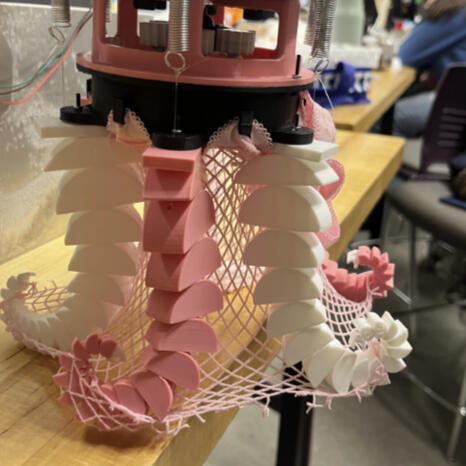
Compliant Robotic End Effector
Octopus-inspired robotic end effector capable of gripping irregularly shaped objects.
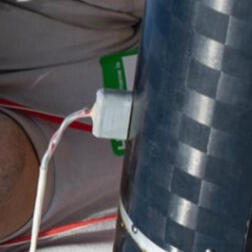
Launch Electrical Disconnect
Electrical umbilical and rocket-side electrical port for Waterloo Rocketry's 2023 rocket, which won 2nd at the Intercollegiate Rocket Engineering Competiton.
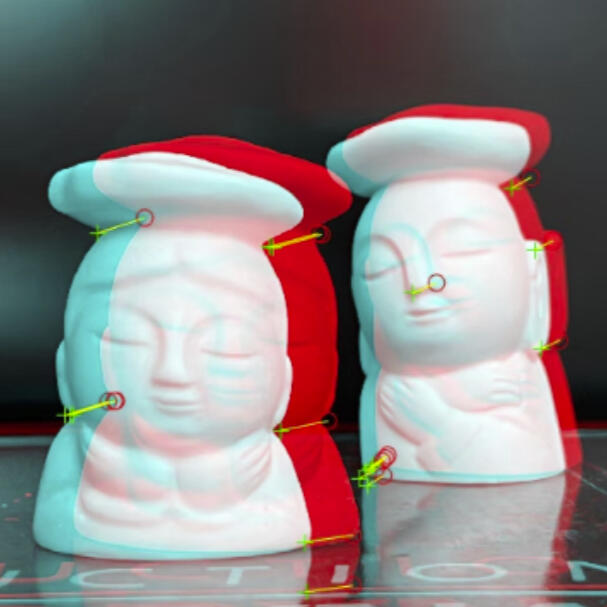
Image Processing
Personal project in MATLAB-based image processing to build skills for analyzing high-speed camera engine experiment images at KAIST's Future Transport Power research lab.
Compliant Robotic End Effector (Pick & Place Robot)
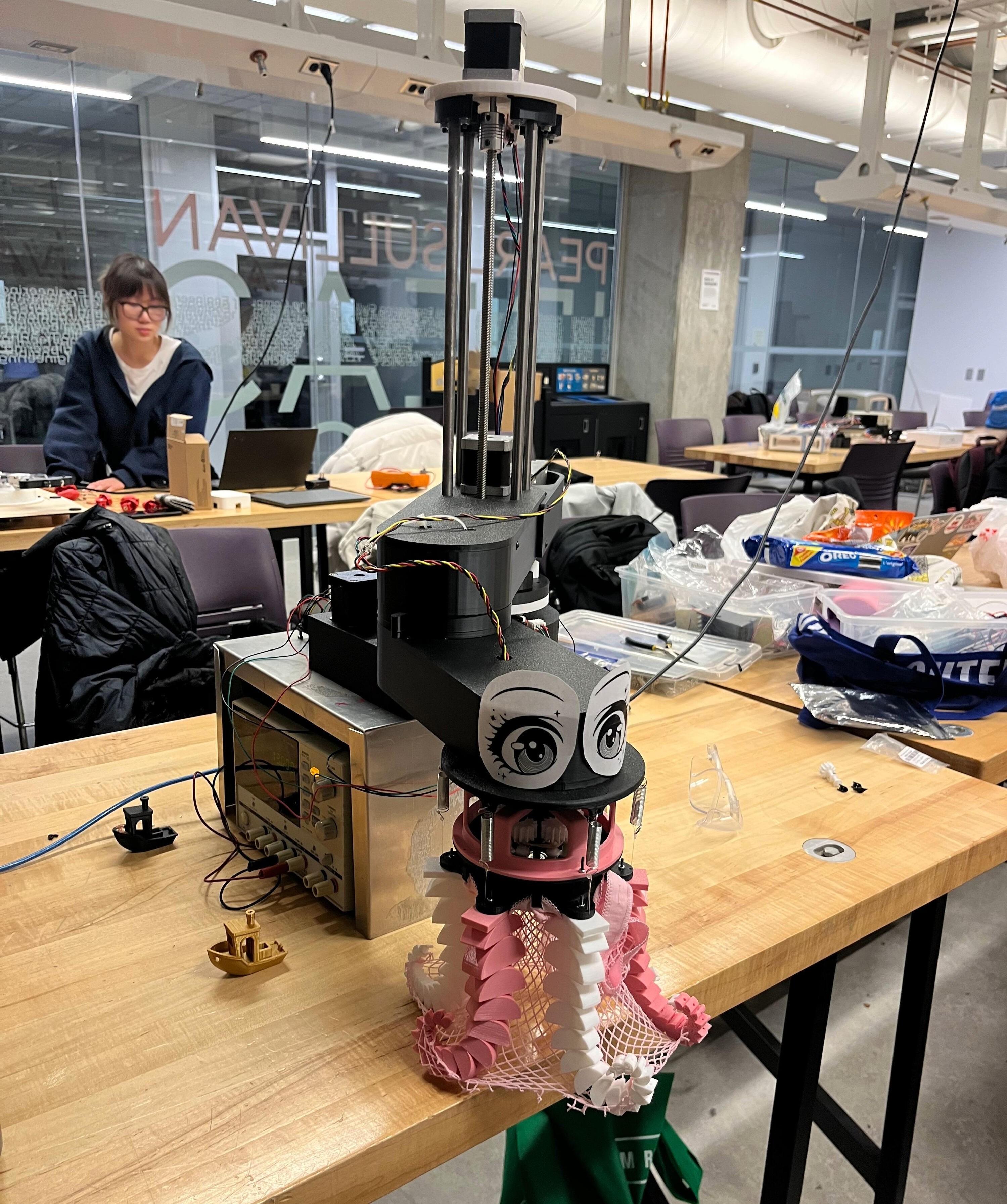
For ME 380: Mechanical Engineering Design Workshop, my team designed, built, and tested a pick-and-place robot to transfer multiple objects from a defined storage area to a drop-off zone, subject to a $300 total project budget. I owned the design, fabrication, and testing of the end effector: the subsystem responsible for object acquisition and release, and the primary interface between the robot and an unstructured set of payloads.
Design Overview
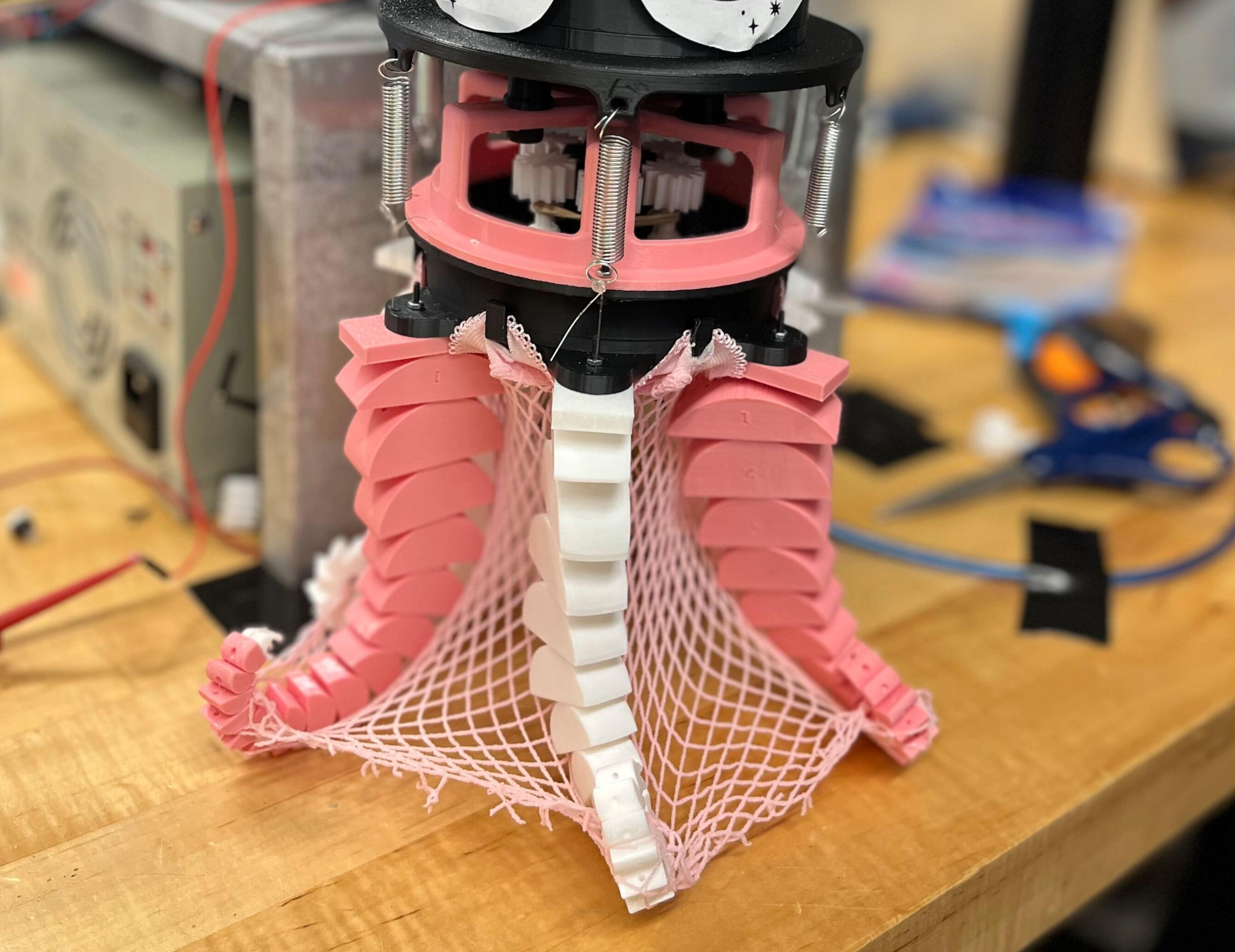
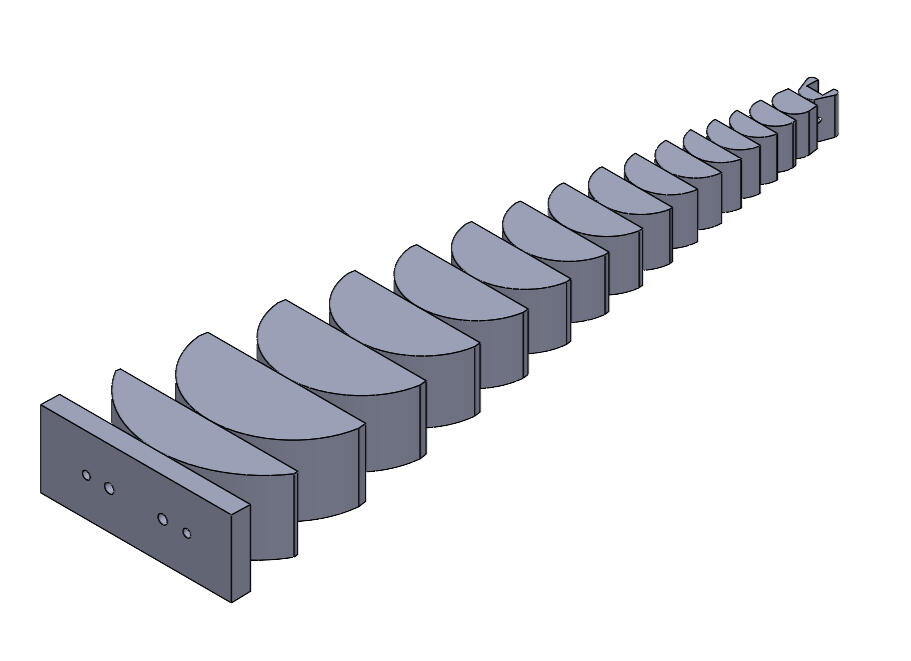
6 identical arms consist of 18 FDM-printed segments that scale down in size as they reach the end of the arm.
Each arm bottoms out independently against the object, deflecting to whatever extent the local geometry requires, allowing the gripper to accommodate irregular shapes at each contact point.
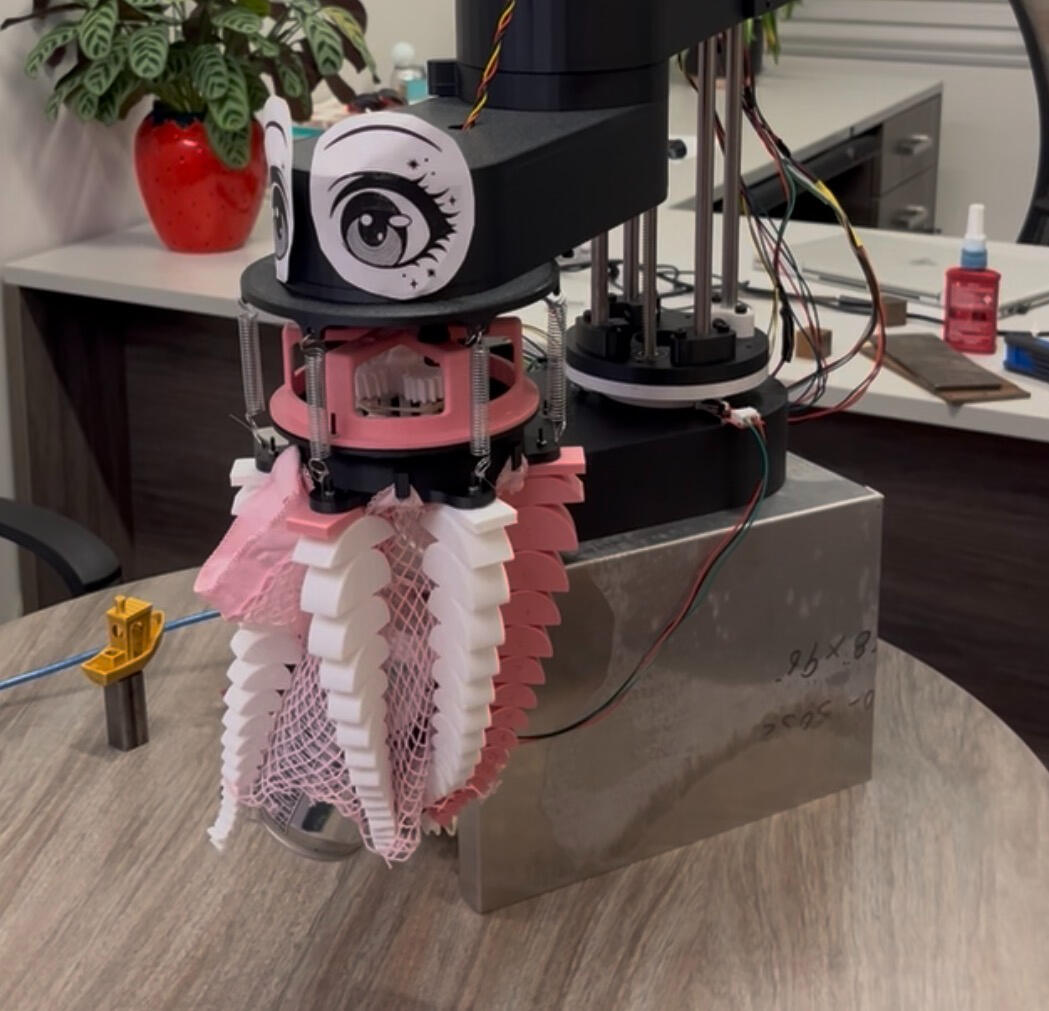
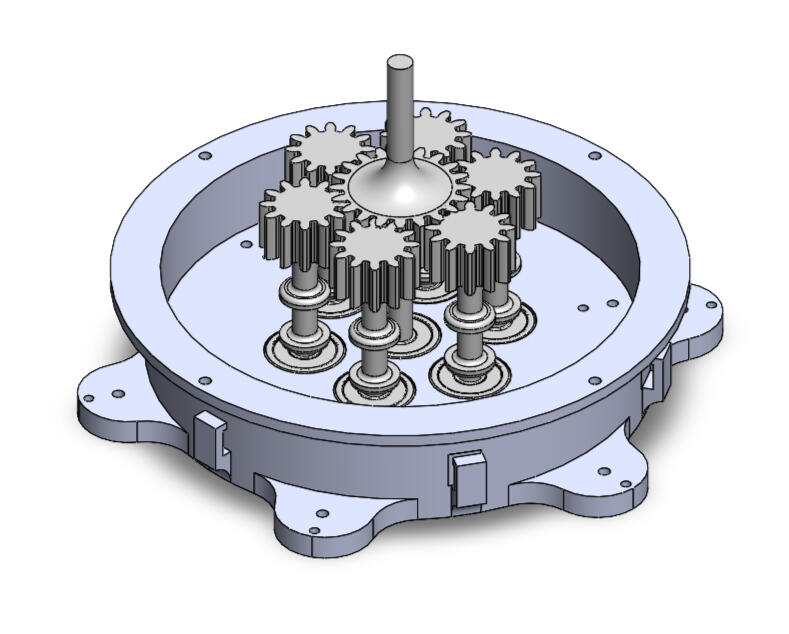
The transmission housing features a 20-tooth drive gear meshing with six 12-tooth driven gears. This configuration was chosen to satisfy packaging constraints, allowing all six gears to fit radially around the central drive gear without interference, while still ensuring the servo input provides sufficient torque to reliably pull in the tentacle arms via their nylon tendons.
Video Demonstration

Launch Electrical Disconnect
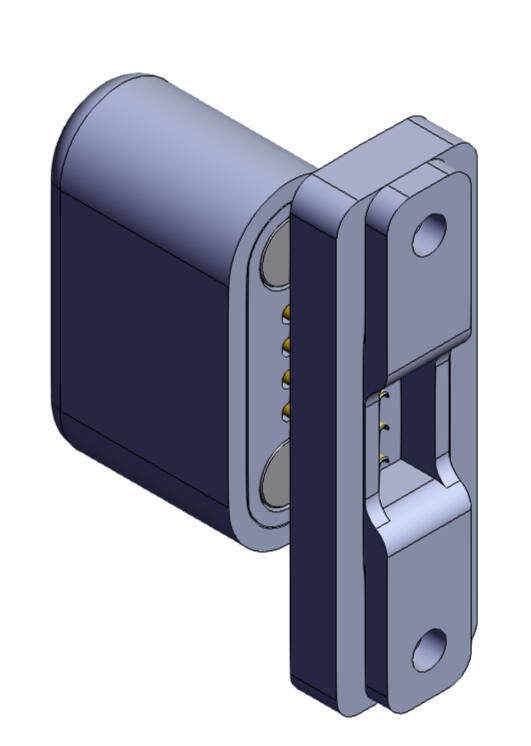
The development of the electrical disconnect sought to address the problem that previous rockets launched by the team did not feature an electrical umbilical. The assembly of the rocket was the last point that electronics could be fully charged, posing a severe issue for battery life of avionics.
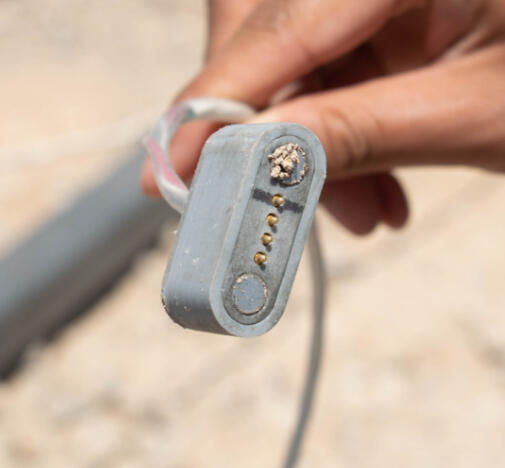
The electrical disconnect involved SLA-printed components with embedded magnets and spring-loaded electrical connectors to charge the rocket and was designed to shear from the rocket upon launch. The umbilical also allowed for wired comms as redundancy should wireless comms from mission control with the rocket fail prior to launch.
Electrical disconnect system deployed successfully on June 21, 2023 during the launch of Waterloo Rocketry's 2023 rocket, "Leviathan of the Sky", which went on to achieve 2nd place in the Hybrid division of the Spaceport America Intercollegiate Rocket Engineering Competition (IREC) in New Mexico.
MATLAB Image Processing
Working at the KAIST Future Transport Power research lab, one of my main responsibilities was using MATLAB to collect data from high-speed camera engine experiment images. To complement the work I was doing for the lab, I embarked on a personal project throughout the term to use image processing techniques in various short-term projects primarily to detect edges of objects and measure distances in 2 and 3 dimensions.
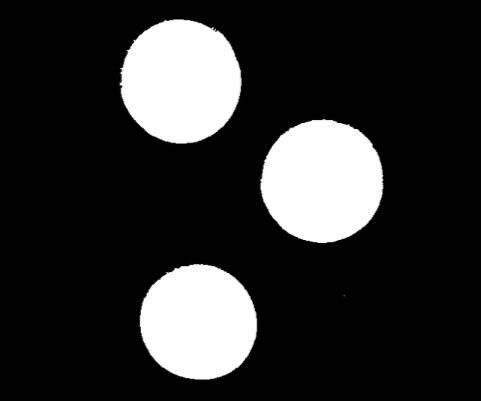
PROJECT 1: IMAGE SEGMENTATION
Using a photo of coins against a blank background for simplicity, this project focused on learning fundamental preprocessing techniques such as thresholding and opening, followed by image segmentation. I used this code to measure the area of a single coin in pixels.
PROJECT 2: AREA OF AN OBJECT USING REAL-WORLD MEASUREMENTS
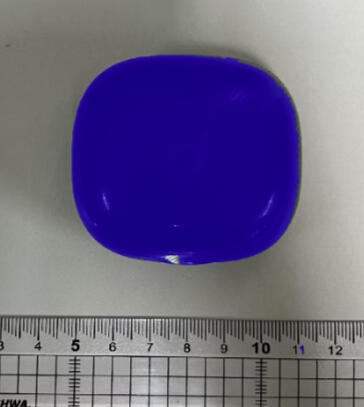
I continued with image segmentation but added a crucial step: converting the segmented mask's area to centimeters using a ruler in the picture as a reference scale. This involved determining the conversion factor from pixels to centimeters based on the ruler's dimensions. By integrating real-world measurements, I aimed to quantify the area of segmented objects accurately. This project provided practical experience in incorporating scale references for precise measurements in image processing applications.

PROJECT 3: COMPARING EDGE DETECTION ALGORITHMS
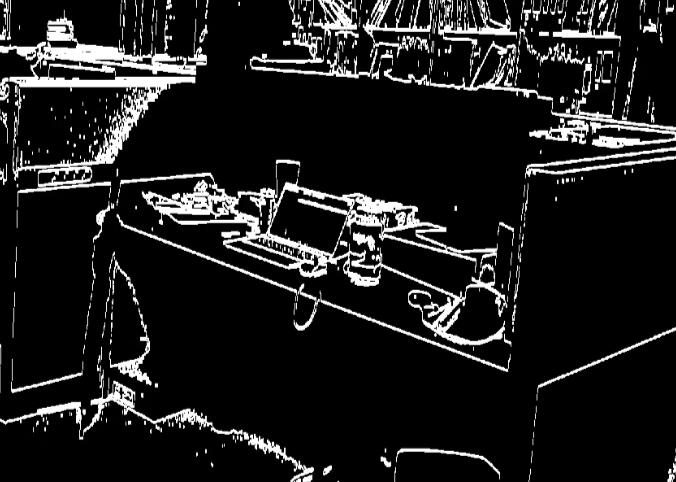
Project 3 was a comparative study of three prominent edge detection algorithms—Canny, Sobel, and Fuzzy Logic—applied to the coin image.
PROJECT 4: LINE DETECTION AND MEASURING DISTANCES
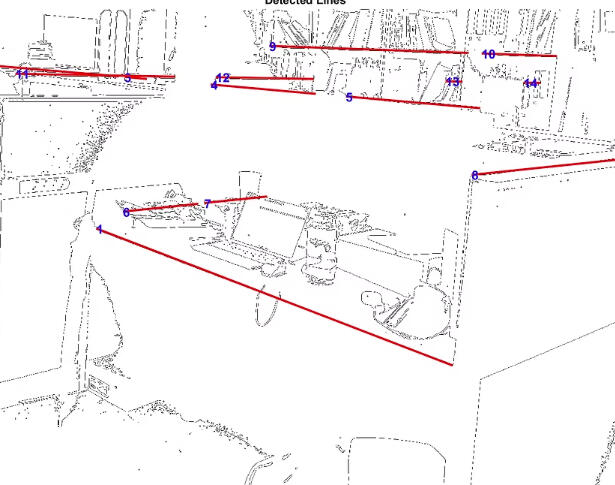
In Project 4, I developed a line-detection algorithm with the capability to input a known distance within the image and output the length of a desired line in centimeters. By incorporating the ability to input a known distance, this project aimed to accurately measure different objects in the image using real-world units. For objects situated at a similar depth in the image, the measurement was accurate within 1 cm. However, I diagnosed some key limitations with this algorithm that impact its accuracy:1. The algorithm only detects straight lines and greatly favours horizontal orientations. Thus, the desired measurement must be a straight edge and vertical or diagonal edges in the image may not be detected. This could be addressed by adding another kernel to detect the vertical lines.2. The algorithm does not account for different depths within the image. Therefore, the accuracy variates depending on how close the depth plane of the desired edge is to that of the reference edge.Project 5 aimed primarily to address the latter issue.
PROJECT 5: COMPUTER STEREO VISION
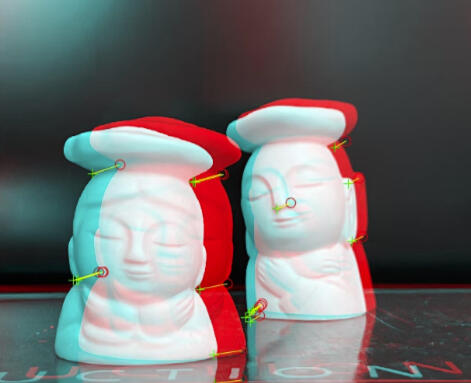
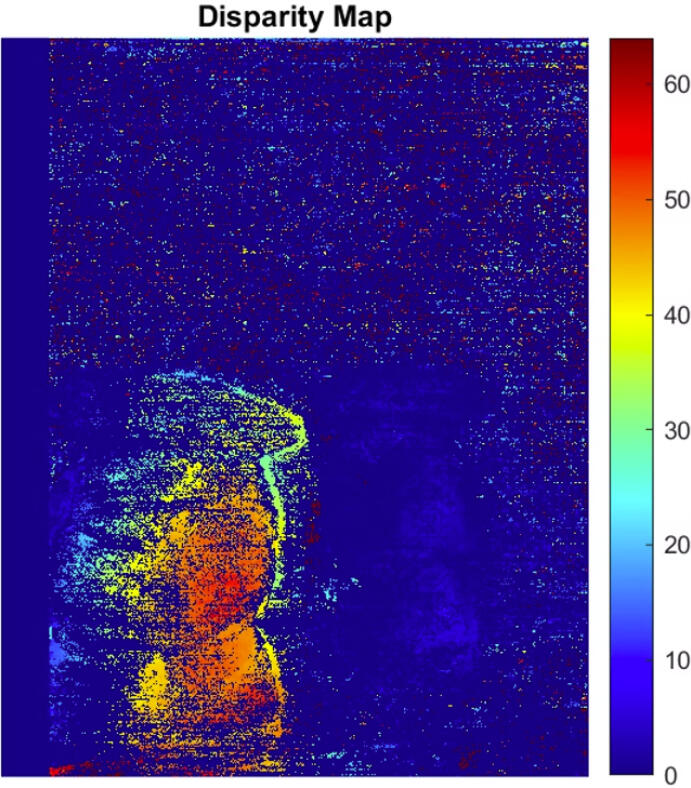
To address the issue of depth of field when measuring objects, I embarked on using computer stereo vision for depth estimation and scene reconstruction. Due to the unavailability of a dedicated stereo camera, I resorted to capturing two consecutive images using an iPhone to simulate stereo vision for this project. This made the task all-the-more challenging as I had to find a way to estimate the stereo parameters of the images, data that I would otherwise have with a typical stereo camera. This involved adding an extra step of checkerboard camera calibration.
As seen in the images above, my first step was to rectify the stereo images, which is a process used in stereo vision to adjust two images so that corresponding points in both images lie on the same horizontal scanline. This alignment helps in matching corresponding features between the images, making it easier to determine disparities and compute depth information accurately. This was done by first detecting and matching SURF features (speeded up robust features). Then, the RANSAC algorithm was used to eliminate outlier points before performing the stereo rectification transformation.The disparity map seen on the right was computed from the rectified images using the Semi-Global Matching (SGM) algorithm. From here, the 3D scene can be reconstructed.